
Cover-Up Shirt Samples: Check the Front Opening
Review a beach cover-up shirt by confirming whether its front fully opens, has a partial opening or uses a particular closure. Check the collar, selected underlayer and coverage on the actual sample. Keep those details tied to the chosen product reference. Words such as shirt, cardigan and shirt dress do not by themselves define the complete front construction.
A trade buyer can recognise a beach-themed print while still being unsure how the garment opens. That uncertainty matters when the item is intended to be worn over another garment. Tianyou’s apparel directory includes several printed cover-up references. Use their actual sample details to define a practical order brief, rather than letting a broad category name make the construction decision.
Ask for the front in the positions that matter
Request views that show the whole front and the opening arrangement clearly. Ask whether the opening continues to the hem, ends partway down or uses fasteners not visible in the main photograph. Identify any supplied closure separately. This gives the buyer a concrete configuration to compare with the intended use instead of an assumption based on styling.
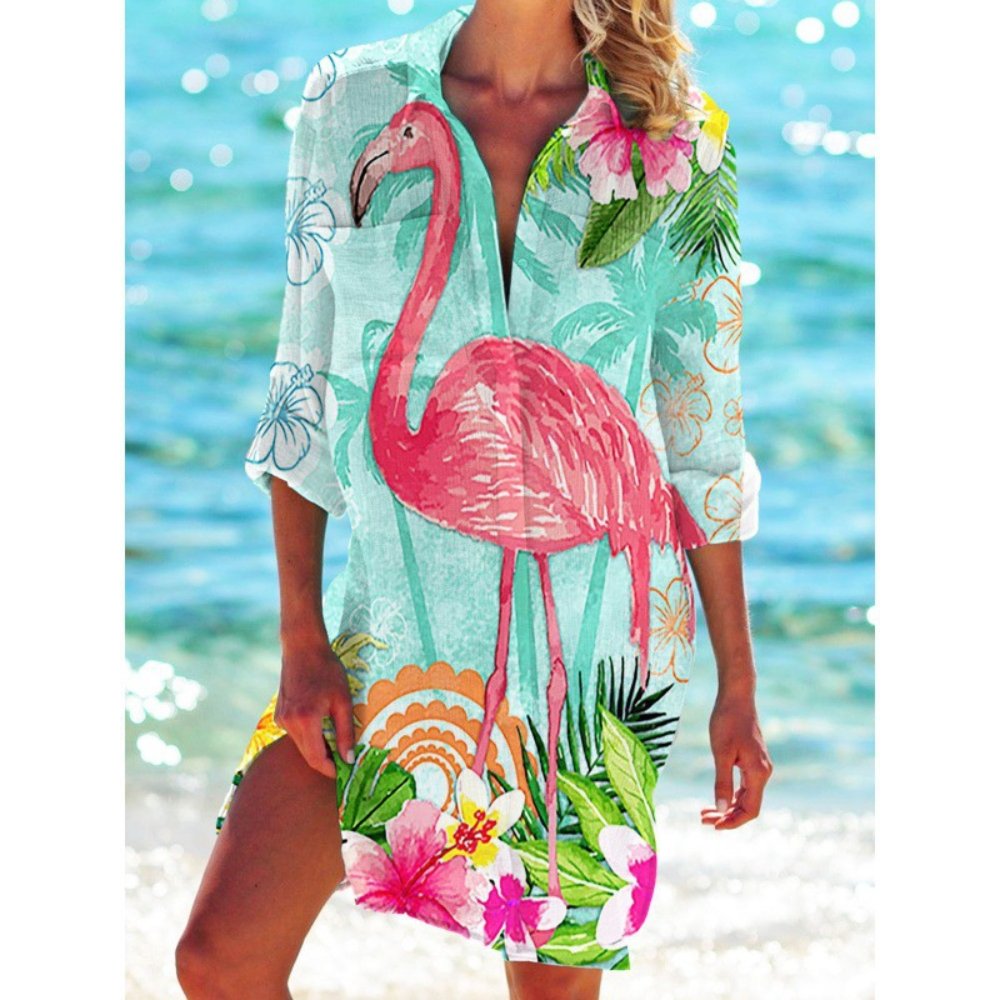
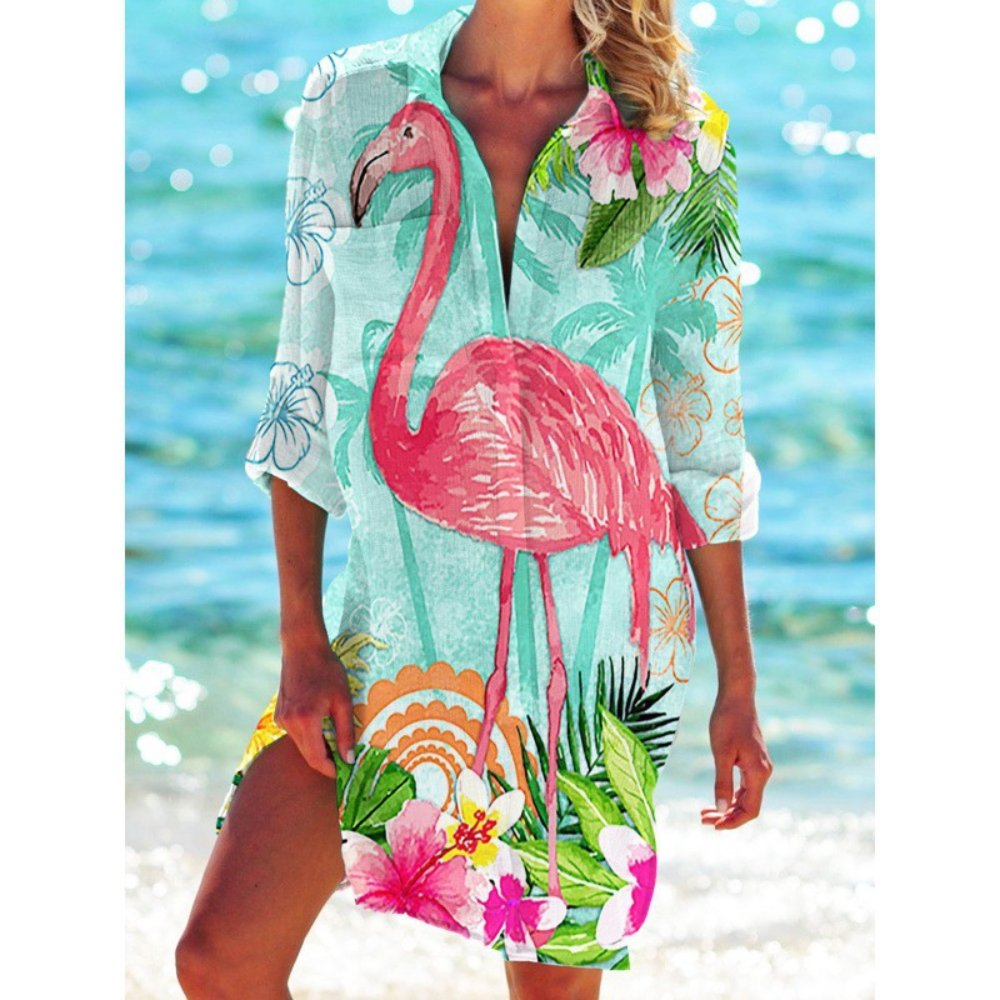
The printed beach shirt catalogue reference shows a collar and a prominent flamingo motif. It provides a useful visual starting point, but the exact opening should be confirmed on the selected sample. A partially open neckline in a model view does not establish every construction detail below it.
- Confirm the full opening arrangement and any fasteners.
- Use one intended underlayer for coverage review.
- Mark important motifs near the opening and collar.
Review the collar and the opening together
Describe how the collar should sit in the intended wearing position. Ask for a close view of the collar ends, neckline edge and any fastener arrangement. If the buyer wants a particular appearance when the garment is open, show that intention in the brief and ask which available sample can represent it.
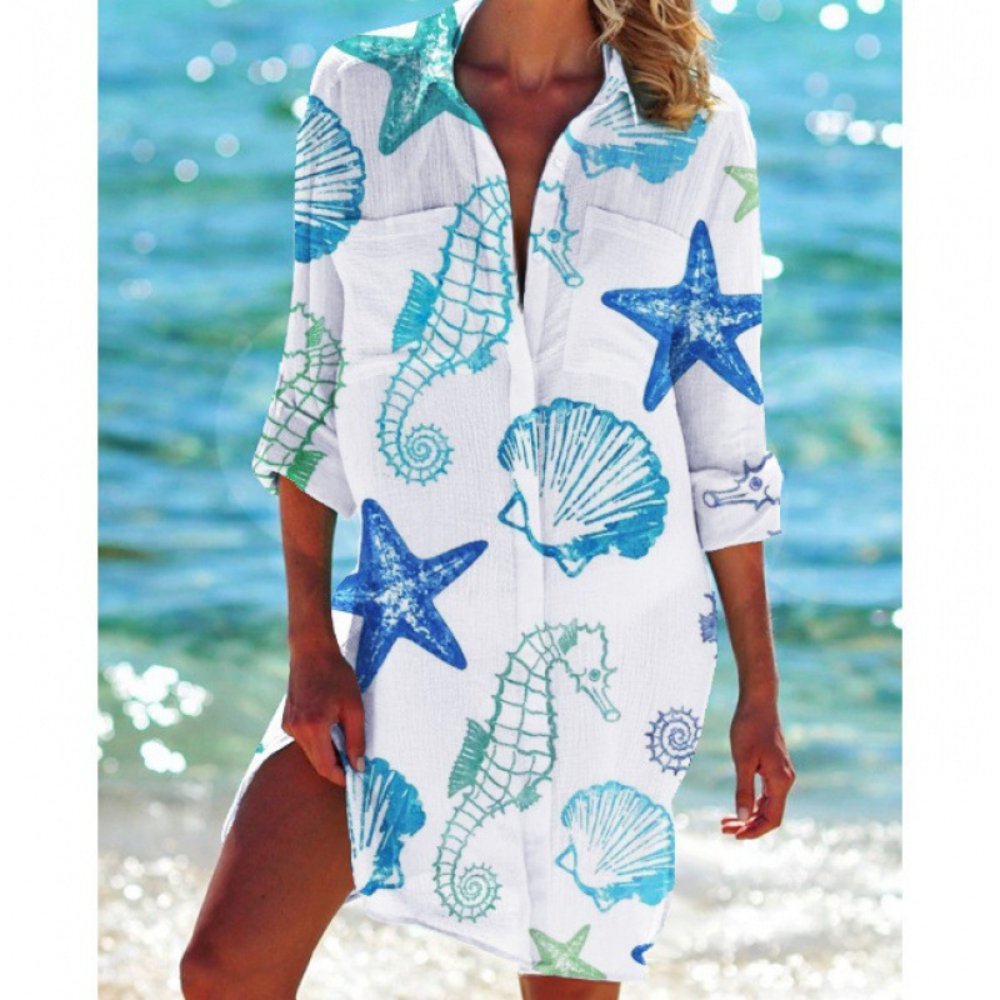
The seahorse and starfish cover-up reference offers a different print on a similar visual silhouette. Keep the construction confirmation linked to that exact reference rather than assuming every printed option shares all dimensions and details. The image can identify the selected design while the sample answers the remaining opening and collar questions.
| Decision | Catalogue view can identify | Selected sample should confirm |
|---|---|---|
| Opening | Visible neckline styling | Actual construction and fasteners |
| Collar | General outline | How it sits in the intended position |
| Layered use | Chosen cover-up reference | Coverage with the agreed underlayer |
Use an agreed underlayer to review coverage
Identify the type of garment intended to sit underneath and ask the reviewer to use that reference consistently. Observe the front opening, side outline and lower coverage while the sample is worn in the agreed ordinary positions. Record what becomes exposed or overlaps differently from the brief without claiming a universal result for every wearer.
Keep the intended garment use distinct from any protective claim. A cover-up name or a longer sleeve does not establish a sun-protection rating, water performance or another tested property. Request an appropriate basis separately if the retail offer needs one, while keeping the sample discussion focused on the actual visible coverage.
Check print visibility around the opening
Mark which motifs should remain readable when the garment is worn as intended. A large subject near the centre can be interrupted by an opening or hidden by a folded edge. Ask whether the selected artwork relationship can be achieved on the chosen garment, and review the answer on the sample instead of promising exact continuity.
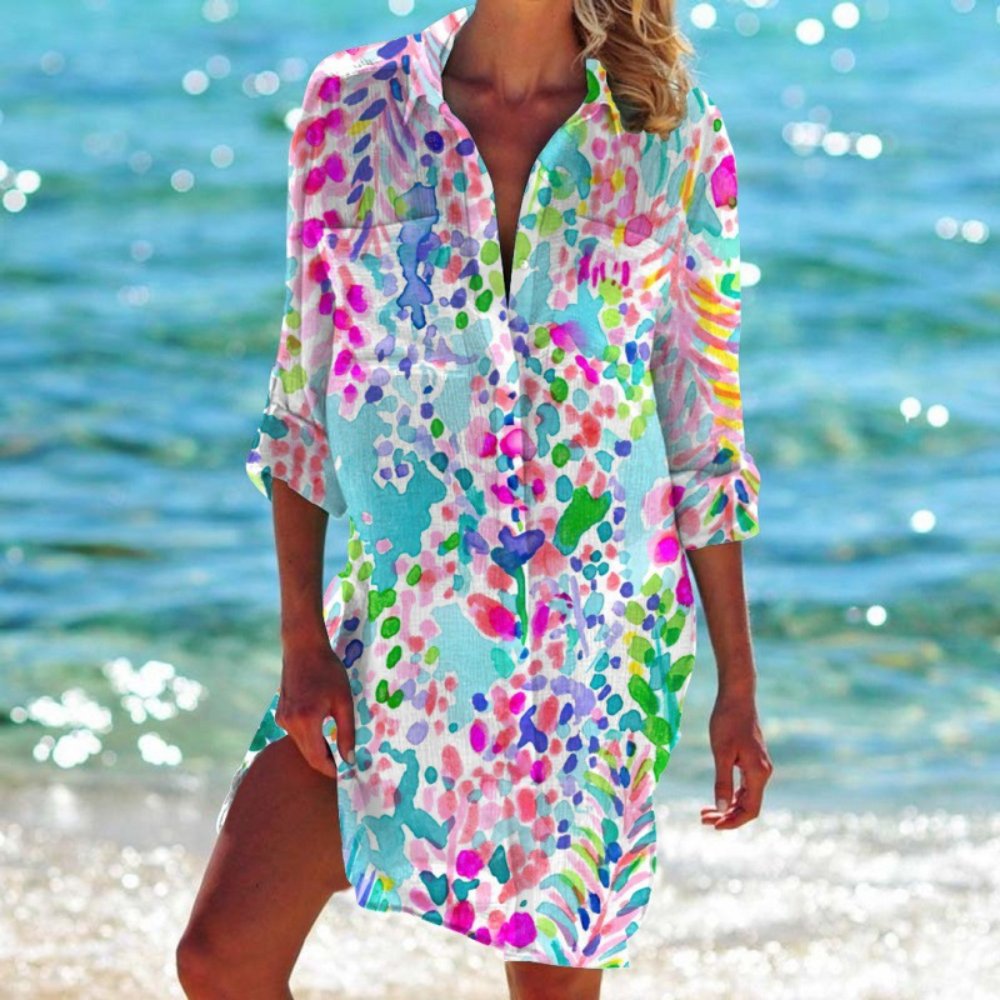
The abstract printed cover-up reference provides another pattern direction for comparison. Keep its image distinct from the flamingo and marine-motif options. If a new artwork file is supplied, identify the requested body and opening arrangement as well as the design; several catalogue views do not automatically define a combined new configuration.
Make the approved configuration easy to identify
Collect the selected product link, confirmed opening arrangement, collar views and layered sample photographs. Include the garment measurements requested for the proposed assortment and identify unresolved comments. If a descriptive field conflicts with another catalogue label, ask for the selected sample specification rather than copying both into the order.
Send the brief through Tianyou contact and ask for current sample options and written confirmation. The custom apparel article hub offers broader sourcing context. Keep fabric composition, printing method and any product-performance statements outside the approval until relevant information is supplied for the exact garment being considered.
Frequently Asked Questions
Does shirt dress mean the front opens completely?
Not necessarily. Ask for the actual construction and the views needed to show it on the selected sample.
Can similar printed options share one approval?
Confirm whether their body and construction are the same. Keep each selected artwork and any differing garment detail identifiable in the record.
Does a cover-up establish a sun-protection rating?
No. The product name and visible coverage do not establish a tested rating. Request relevant product evidence if that claim is required.
What if catalogue sleeve descriptions differ?
Request measurements and a specification for the exact sample. Record the confirmed sleeve arrangement rather than inferring it from inconsistent labels.